Note that we’re talking here about agentic commerce in the consumer arena: it will differ in the corporate arena where your company makes more of the decisions. While we’re at it, here are a few quick definitions so we’re all on the same page:
- Agentic Commerce: Agentic commerce refers to AI-driven systems that make purchasing decisions on a consumer’s behalf, often with little or no direct input at the moment of transaction.
- Top-level Agent: The GenAI agent consumers interact with directly, for example, Google Assistant or Apple Intelligence. Top-level agents may interact with other agents to accomplish the consumer’s goals, but the top-level agent runs the show.
Having recently looked at the way the Tech Titans (Google, Apple, OpenAI, and Meta) are positioning themselves to dominate agentic commerce channels and the level of autonomy those agents will grant us,let’s take a look at how they plan to power their models and agents to entice us to comply. You might wonder why you’d let anybody’s agent lead you around, but the Titans hope you’ll find enough benefit from their top-level agents to make it worthwhile. What do you get with agentic channels you can’t get otherwise? Here are a few of the inducements agents offer to consumers.
Radical Personalization
Genuine personalization, beyond the current focus on marketing campaigns, will finally be within reach. If the top-level agent on your devices has a memory function (as most do now), it can analyze and store your preferences for just about anything you do as you interact with it. For example, it can remember the size of your shoes or your favorite pizza toppings or your travel preferences for airlines, hotels, and activities. When you’re ready to buy again, it can call up those preferences and use them to select options that fit those preferences. This can make it easier for you to shop for just the things you are most likely to want, rather than the things that are most profitable for advertisers or suppliers.
Convenience
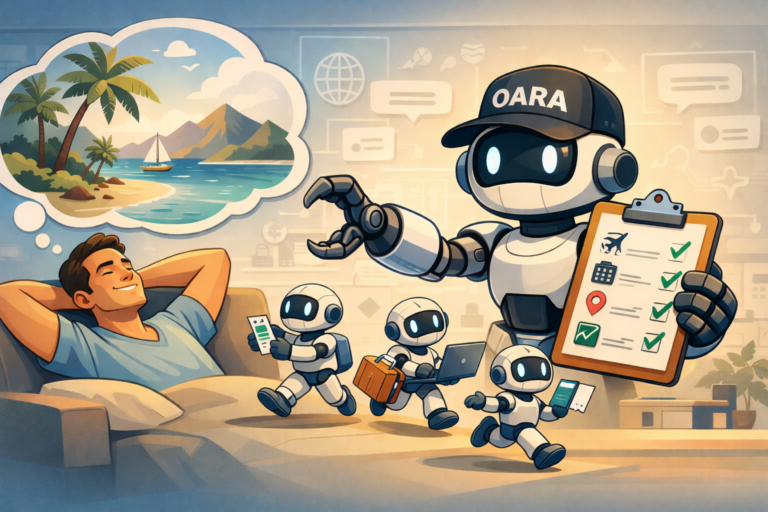
When you think of all the effort involved in shopping for products via digital channels for everything from groceries to hard goods to services (including travel) can be staggering. Travel transactions are among the more complex situations we have to deal with, and they’re not made any easier by limited ways to search and seeing dozens of choices for each component. But what if you had a long-term, personal assistant who knew all of your preferences and who you could trust to find the products and services you would find most appealing…and then buy them for you with minimal interaction? The idea behind a top-level agent is to provide just that: an agent that knows so much about you that it’s capable of choosing a highly curated and personalized list of options for you to choose from. The more you use it, the more it learns and the better its recommendations. A good top-level agent can save you time and money, freeing you up to doom scroll those cat videos you’ve been saving for later.
A Proactive Assistant/Therapist/Whatever
We’ve been focusing on agentic commerce activities for top-level agents, but they can do much more. A recent study of the kinds of things we actually use LLMs for placed therapy at the top, so clearly it’s not all about the purchase. But even these other activities can inform the agent in ways that can help with agentic commerce. If you’ve been wrestling with a need incorporate more exercise in your daily routine, the agent might suggest a very active hiking or cycling vacation. Or if you’ve been worrying about not seeing your spouse because of a big project, what about planning a four day romantic getaway when it’s over?
It’s also easy to see that an agent doesn’t have to wait until you request something of it explicitly. The recommendation for a particular type of trip might happen when you ask it for a specific plan, but it could also be a spontaneous suggestion that arises in another context entirely, like a therapy session. Proactive agents tend to be very surprising the first few times they offer an unsolicited suggestion, but trust me, you get used to it and those suggestions are often surprising and welcome.
How can they make this happen?
Data, data, and more/better data
Modern Generative AI (GenAI) hinges on data at every phase, from pre-training giant models to tailoring AI copilots for niche domains. The breadth and depth of data will depend on each company’s native capabilities plus what it can buy or convince us to share with it. The following list illustrates just some of the data these Titans may have access to. We often think of large companies in the travel domain as having lots of data to work with; hopefully this will give you a sense of how much more the Titans have. Travel entities pale by comparison.
What do they have now?
Email, messages, browser activity, map data, web search history, local files, etc. are available to device operating system providers like Apple (iOS, iPadOS, and MacOS) and Google (Android). Some or all of this data may be made available to third party model providers like Meta and OpenAI via connectors, but the friction of setting up and maintaining the connectors may make it less prevalent.
Chatbot interactions, transaction (purchase) data, and social media would be available to both device providers and to the companies that provide the services used in those interactions, but there are a lot of nuances in these incredibly rich feeds. Generally, device OS providers like Apple and Google would see them on the device both during the transaction and from confirmation emails and messages, and so would the service provider. For example, Google and Meta would be able to see chatbot interactions with MetaAI for Android users, but OpenAI and device providers other than Google (e.g., Samsung) would not—and vice versa. Other entities might be able to see these streams if they provide connectors and the consumer allows access but, again, this introduces a lot of friction to the process.
What do they do with all that data?
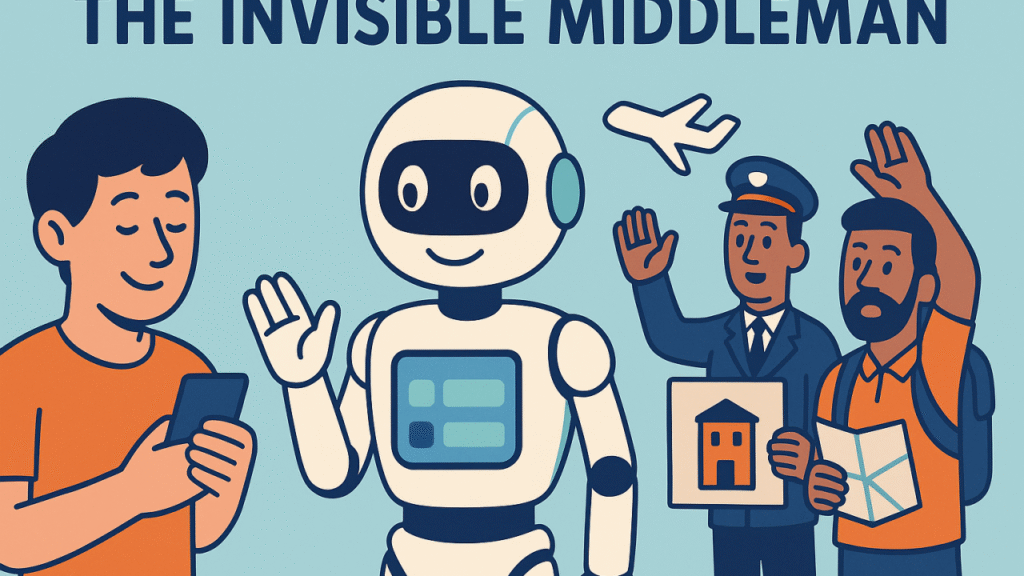
When you consider that the top-level agents operate very close to the customer (the very top of the funnel), they have (and use!) loads of personalization data that no entity in the travel distribution network can rival, and they can work proactively as well as responsively on the consumer’s behalf, it’s easy to see how they can provide a service to customers that will be readily accepted and used well before the customer/agent reaches you.
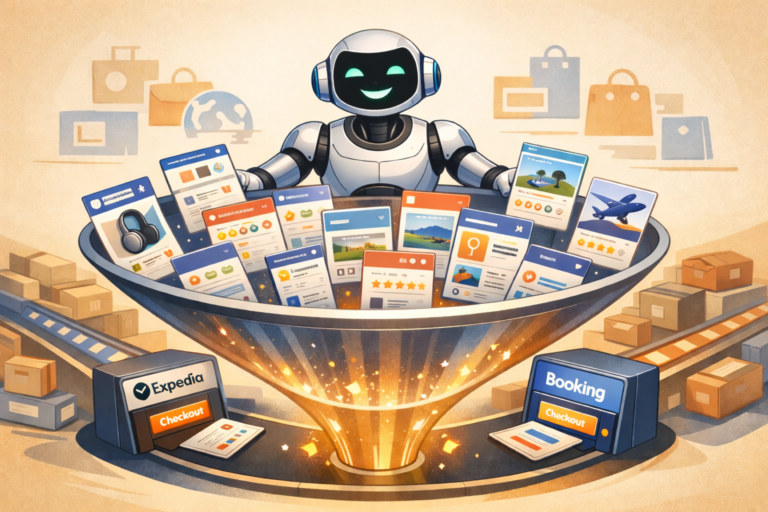
Today, a customer might browse five websites, compare rates, read reviews, and finally book through a travel portal. In the near future, their top-level agent may handle all of that in the background, potentially bypassing every touchpoint the traditional travel industry relies on.
This is not to say that non-agentic channels are going away, any more than the offline channels didn’t go away when digital channels appeared via the internet. But given the advantages of agentic channels to consumers it does mean that some percentage, and that percentage is likely to grow vigorously over time as agents improve, will switch from non-agentic digital and offline channels to the new agentic channels.
Can I trust my top-level agent?
It’s easy to see why customers might want to use a good top-level agent, given all the obvious advantages it will provide. But there are some important issues to consider when empowering a top-level agent with your personal data. Giving an agent access to your personal life might be palatable, but what if you don’t? Well, you can always turn off permissions and data feeds for most of these agent providers (Meta being a notable exception), but you have to wonder whether it amounts to closing the barn door after the cow is gone. Once a model provider has a treasure trove of data on you, they could potentially use it in ways you might not foresee.
As we mentioned in a previous article, having all that data could be used to personalize services for consumers. However, it could also be used to persuade them to do things not in their best interest, like buying a product or service because its advertisers were willing to pay the highest price rather than because it best suits the consumer’s needs.
However, advertising might be one of the least harmful ways to deploy persuasion. Consider a top-level agent that knows how you feel about a range of personal and political ideologies. Given the proper financial incentives, it’s not too difficult to foresee a day when those agents could be used to gradually persuade consumers to consider and eventually adopt different positions on those ideologies. As I’ve said before, “… let’s remember that the same technology that can sell you a pair of shoes can also be used to sell you on an ideology. Let’s let that sink in.”
So while the benefits of using a top-level agent are obvious and compelling, consumers would do well to consider the companies they do business with. There’s lot at stake!
As for travel industry entities, this shift will require a rethinking of how each fits into the new agentic channels. Remember that each top-level agent will have a different agenda. Some will be happy to take your advertising dollars and try to tilt the consumer’s decision in your favor. Others will stick with the consumer’s best interests, so the best way to be represented is to appeal to the customer with loyalty programs, special offers, and great experiences using what you offer. In a way, it goes back to the oldest of rules for business: make your customers happy!