TL;DR
-
Anthropic’s accidental code leak revealed Conway, a persistent personal agent deeply embedded in production code and estimated to be months from release — likely before the end of 2026.
-
Conway is not a travel product. It’s a personal agent that handles everything — email, calendar, tasks, research, shopping — and travel is one of the domains it will manage. When it handles travel, it becomes the buyer’s agent.
-
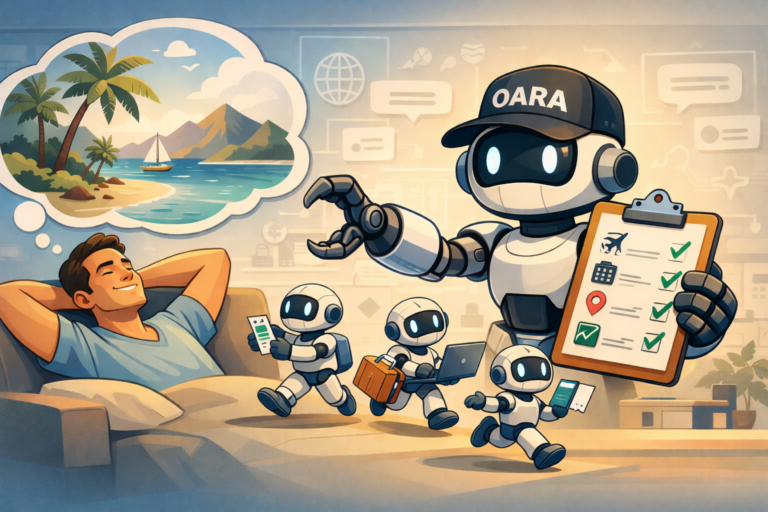
The difference between a chatbot and a personal agent matters. A chatbot responds to a prompt. A personal agent gathers context over time, detects that a trip is forming from calendar entries, emails, and chat threads, and surfaces a plan before you ask for one.
-
Every major AI company is racing to build the One Agent to Rule Them All — a single persistent agent that becomes the consumer’s default entry point for everything. OpenAI, Anthropic, Google, and Meta are all in this race. The winner inherits the aggregation power that used to belong to search engines and OTAs.
-
Memory is the moat. The agent will remember which hotels delivered on promises and which ones didn’t. The Tech Titans are all using their LLM’s memory capabilities to absorb key pieces of user conversations today as well as in anticipation of personal agent use. The movement has already begun—it started just over a year ago. On the flip side, spam and broken operational commitments won’t just annoy the guest — they’ll teach the agent to disfavor your brand.
-
The agent will establish travel defaults before the traveler consciously starts shopping. Hotels that help set those defaults early — through clean content, MCP endpoints, seller-side agents, loyalty authentication, and operational follow-through — will be included in recommendations. Hotels that wait will find it increasingly difficult to break in once the defaults harden.
-
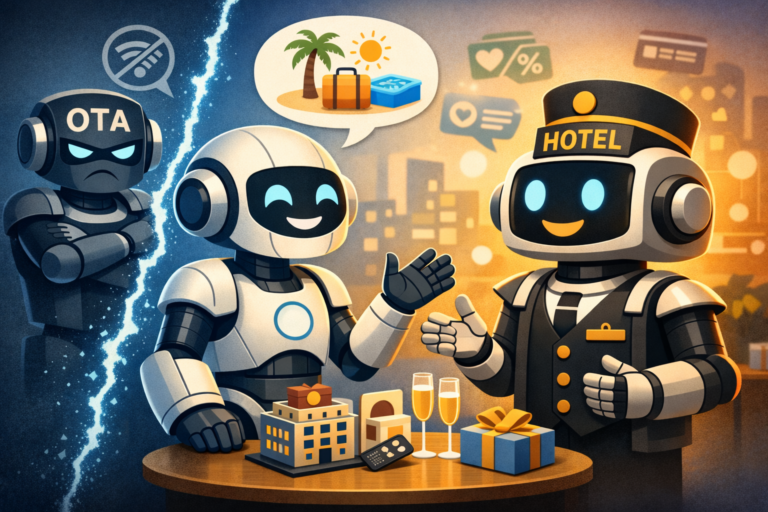
Hotels can offer personalized packages through seller-side agents that OTAs can’t match — and that don’t violate price parity agreements. The value differentiation comes from loyalty entitlements, room attributes, service promises, and operational commitments that only the hotel can deliver.
-
Conway doesn’t change what hotels should build. It changes how soon they need to start. The timeline just compressed from “someday” to “months.”
Many people I talk to in hospitality still think AI agents are stalled. They’ve seen the demos, asked a chatbot for a hotel in Paris or Miami or Chicago, and gotten back something that looks a lot like an OTA result list without saying much about how it might be different. “Agents aren’t there yet” has become a common position in the industry.
They’re not entirely wrong about the current experience, though even today’s chatbots are often better than the alternative — manually juggling three OTA tabs, a Google search, a loyalty app, and a TripAdvisor page while trying to remember which hotel your colleague recommended last time. Chatbots aren’t great yet, but the bar they need to clear isn’t exactly Olympian either.
Still, most people are judging agentic travel by the quality of a single-turn chatbot session. That’s like judging the web in 1995 by whether your dial-up modem could load a hotel photo before you lost the will to live. There’s a fundamental difference between a chatbot and a personal agent that most of the industry hasn’t absorbed yet. A chatbot is an instantaneous engagement — the consumer has an idea, types a question, and gets a response. That’s it. A personal agent is something else entirely. It gathers information over time, builds context across your digital life, makes judgments about what might be happening, and marshals its memory to address needs, sometimes before you’ve even formed the question. One reacts to a prompt. The other anticipates the work.
That’s why Anthropic’s upcoming Conway agent matters. And almost nobody noticed it after a recent unforced disclosure error, but you’ll be hearing a lot more about it during the balance of 2026.
=================
A note on focus: This article concentrates on Anthropic and OpenAI for a specific reason. Both companies have structured their business models around producing the best possible recommendations for the consumer, without altering those recommendations based on advertising or other commercial relationships. Their incentive is to make their agent so good that it becomes the “One Agent to Rule them All” consumers use for everything. Google and Meta, by contrast, are incentivized to optimize for advertising revenue, which creates a structural tension between what’s best for the consumer and what’s best for the platform’s bottom line. That distinction matters for hotels thinking about which agentic channels will reward the best offers for consumers versus which ones will reward the highest bidder. The advertising-based model may change for OpenAI and Anthropic in the future, though I doubt it — the whole strategic logic of the One Agent depends on consumer trust, and once you start selling placement, trust erodes quickly.
=================
Anthropic’s been having a terrible, horrible, no good, very bad month.
After a very public fight with the Department of War, a capacity crunch and outages that spilled out into conversations on X, and the constant footsteps of OpenAI with its upcoming Spud model (just released as GPT-5.5), Anthropic must have asked itself, “What else could go wrong?” Well, hold your beer…
On March 31, they accidentally shipped a source map file in a Claude Code package that pointed to an archive containing roughly 512,000 lines of code — the entire source of Claude Code, the harness for their flagship AI coding tool. The leak wasn’t the model itself, nor Mythos (Anthropic’s unreleased frontier model). It was the surrounding agent harness: the tool, memory, execution, and control layers that help a model become useful in the real world. If your immediate reaction is an empty stare, you’re in good company. The developer community, however, treated it like Christmas in springtime. Anthropic is very good at building agent harnesses, and a lot of software engineers were eager to look inside the machine.
Most of the coverage focused on the code itself. But a handful of researchers pulled on a thread that the vast majority missed — and the implications of that thread are enormous, not just for how travel will be purchased in the future, but for how nearly everything will be purchased.
On April 8, Nate Jones surfaced the discovery in his Substack: references to an always-on agent called Conway, deeply embedded in the code. Conway hasn’t been released, and Anthropic may change the name, the interface, the packaging, or the timing before anything reaches the market. But based on Nate’s analysis, this isn’t early-stage experimentation. The infrastructure is detailed and specific enough that he estimates Conway is months, not quarters, away from something that could be released — likely before the end of 2026, framed as a Claude Pro feature or a standalone product. I highly recommend reading Nate’s substack for its technical detail around the Conway discovery; in this article, I’ll turn to its potential specifically for travel.
Personally, I don’t much care about the finer details of the harness. Not my lane. But for travel distribution, Conway is the leak story that matters. And boy, does it ever.
Based on Nate’s review, Conway appears to be a standalone agent environment, separate from ordinary chat. Not just another conversation pane. More like an operating surface for an agent that stays available, connects to tools, manages extensions, controls a browser, and can be woken up by outside events. That last part matters for travel because a normal chatbot waits for you to ask it something, while a persistent personal agent can notice that something needs to be done before you’ve even turned it into a task.
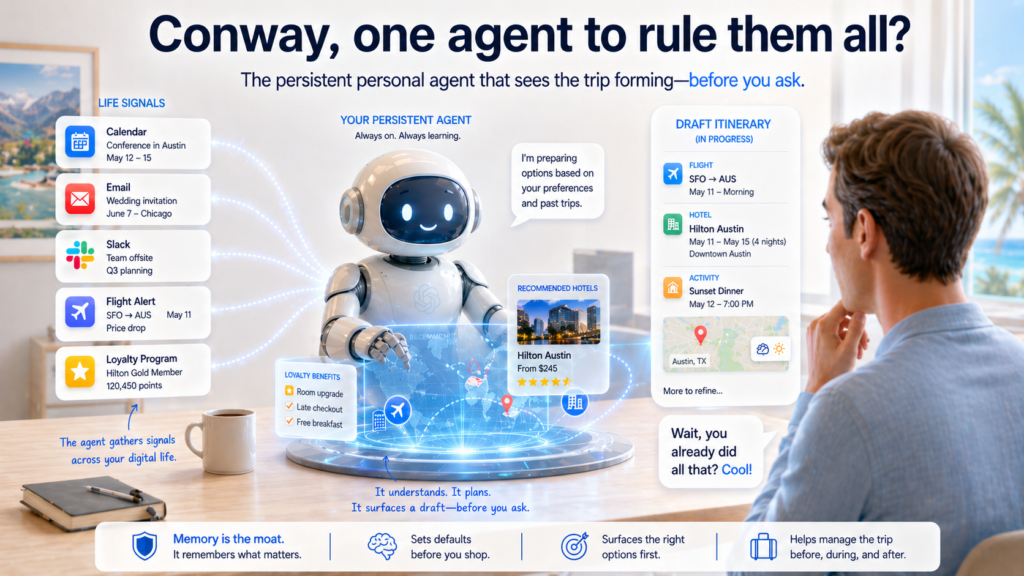
For example, A calendar invite appears. A client meeting gets scheduled. A wedding invitation lands in email. A flight gets changed. A Slack thread starts talking about an offsite. A loyalty account is close to a status upgrade threshold. A hotel where you like to stay opens award availability. Nobody has typed “find me a hotel” yet, but the agent can already see the outline of the trip it may need to help create.
Conway Is Not Your Travel Agent — It’s Much More
Conway won’t be your travel agent, at least not in the traditional sense. It’ll be your personal agent, and travel will be one of the many things it does for you. When it handles travel, it becomes what I’ve called the buyer’s agent — deciding which hotel seller agents, supplier endpoints, MCP servers, content sources, loyalty accounts, and external data sources deserve to be consulted on your behalf.
A travel agent is a domain-specific role. Human travel agents work specifically with travel; they don’t help you with a PowerPoint for your presentation on Friday or a recipe for Sunday dinner. A personal agent is a layer above domains. It will get to know you across email, calendar, files, chats, browser history, tasks, preferences, prior decisions, and even your loyalty and payment relationships. Travel is just one category of work it can perform, along with email triage, meeting prep, research, document review, and scheduling. And selecting dinner recipes, of course.
It doesn’t have to know every detail of every hotel distribution path on its own. It can call tools, query supplier systems, ask specialized sub-agents, consult reviews, check maps, read policies, compare loyalty entitlements, and monitor changes after the booking. If that sounds ambitious, it is. But it’s also where the major AI companies are clearly headed. OpenAI’s hiring of Peter Steinberger, the creator of OpenClaw, to help build next-generation personal agents is evidence that Anthropic is not alone in chasing this layer.
For hotels, the strategic question is not “Will Anthropic build a travel product?” That’s going in the wrong direction. The real question is what happens when a persistent personal agent sits upstream of travel shopping and decides where to go for answers, offers, bookings, and post-booking management.
The OTA Gets Invoked; Conway Is Already There
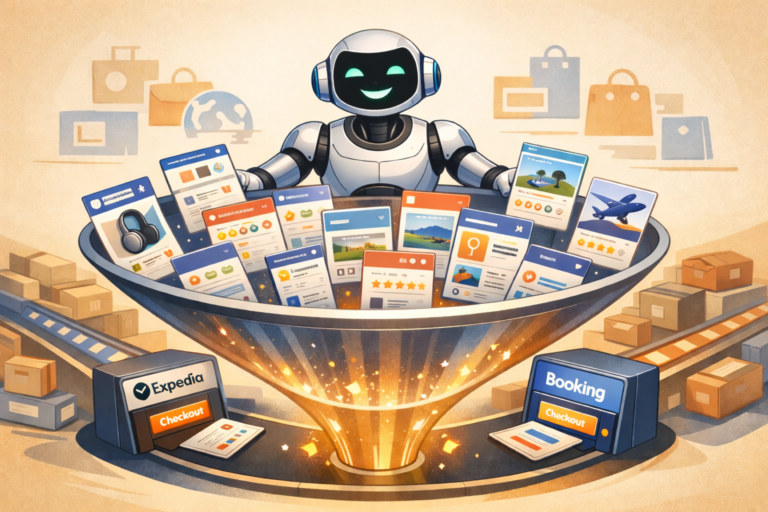
Here’s a channel distinction I think hotels need to understand. An OTA enters the shopping process when the traveler affirmatively invokes it. You go to Expedia. You open Booking. You ask Priceline. You search Google Hotels. You decide to bring the intermediary into the process.
A Conway-style agent is different because it’s already helping you manage the surrounding work of life. If it’s triaging email, summarizing chats, reviewing files, watching calendar events, monitoring notifications, and coordinating tasks, then many of the permissions needed to detect travel intent are already in place. You don’t grant Conway “travel access.” You grant it assistant access, and travel becomes one of the many jobs that fall out of that broader role. Over time, as you build trust with the agent and as the underlying AI models get better with agentic workflows, you give it more authority across a broader range of your life. One day, voila! Jarvis is in the house!
It’s a huge difference: the OTA is invoked; the personal agent is already there. And because it’s already there, it can see trips forming before you’ve started shopping. A conference invite lands in your inbox. Your calendar shows that you’ll need to be in Dallas on Tuesday morning. A colleague sends a note asking whether you’re staying over. A flight gets changed. A Slack thread starts talking about an offsite. None of that looks like hotel shopping yet, but to a persistent agent, it already looks like the outline of a trip. Travel rarely begins as one clean shopping task — it emerges from dozens of small signals scattered across systems that were never designed to talk to each other, only to the traveler.
Now add the context that compounds over time. The agent will know that you prefer quiet hotels on business trips, that you care more about walkability on leisure trips, that your spouse dislikes long rides from the airport, that you avoid early departures when possible, and that you had a bad stay at one property last year, even though the rate was attractive. In the web world, intent is mostly session-bound — the site sees what happens during that visit and not much more. A persistent agent brings context forward across sessions. It will know your prior trips, recurring preferences, tolerance for inconvenience, family patterns, work obligations, and the little preferences you don’t want to type into a search box every time, but that matter nonetheless.
This is where the memory argument becomes central. In the web world, SEO is about getting human attention. In agentic channels, the agent doesn’t have attention in the human sense. It has memory, context, and criteria. The play is not to interrupt the traveler with a better ad; the play is to make sure the agent’s memory is populated with positive, accurate, useful artifacts about your brand, your properties, your service, and your ability to deliver. If you’ve been reading my earlier articles, you’ve seen me make this argument before: memory is the new SEO. The agent will remember which hotels have reliably produced good outcomes — and which ones haven’t.
And here’s a point that should make your email marketing team sit up straight: in the agentic world, spam isn’t just an annoyance — it’s a brand risk. If you’re carpet-bombing consumers with unsolicited offers that get immediately deleted, the agent can use that pattern to disfavor your brand in future shopping. The agent sees the deletion. It learns the pattern. In the past, spam was just noise the consumer filtered out. In the future, it could actively damage your standing in the agent’s memory. Think about that the next time someone in your organization wants to “blast the list.”
In web distribution, the hotel fights to be seen. In agentic distribution, the hotel fights to be remembered favorably.
The agent will also know that you usually make the final purchase decision yourself. I’m not assuming that most people will hand over the reins and let an agent shop and book with no involvement. I wouldn’t even do that with a human travel agent, and I don’t believe a good one would ask for it. The more likely pattern, at least for a long time, is that the agent works with the guest up to the point of purchase, then stops and brings the user back in to review and approve. That’s not full autonomy, but it’s more than enough to alter the distribution path. From the hotel’s perspective, does it really matter whether the booking is finalized by the consumer or the agent? It’s a head in a bed either way.
And this is why the common industry argument that “travel is too complex for AI” needs a final burial. Some travel questions may be too complex for a chatbot to infer from a single prompt. It’s a much easier problem for a persistent agent that knows you, sees the trip forming, calls specialized tools, spins up sub-agents to break the research into manageable chunks, and keeps working after the booking.
Where Does the Buyer’s Agent Shop?
Once the buyer’s agent understands the traveler’s intent, it still has to decide where to shop. It will consult web content, search reviews, check maps, use MCP lookup services to find agent-ready endpoints, call an OTA because the OTA has structured inventory and a working integration, call a hotel brand directly, or talk to a hotel seller agent. The buyer’s agent won’t care about channel politics. It will care about getting the best outcome for the traveler.
That creates a practical test for hotels. If one source returns clean, structured, personalized offers and another source makes the agent scrape a booking engine like a raccoon trying to open a locked cooler, the agent will learn which path to prefer. Hotels already have human-readable direct channels for the web. Now they need agent-readable capabilities for agentic channels.
That starts with clean, robust, and authoritative data. Rates, availability, inventory, policies, fees, amenities, room attributes, images, accessibility information, location details, dining, parking, pet policies, family suitability — all of it needs to be reliable and structured. If a hotel’s own content is inconsistent across channels, agents will either lose confidence or rely on someone else’s version of the truth. Neither outcome is attractive.
But clean content is the beginning, not the end. Hotels need MCP-enabled capabilities that let buyer agents do real work: search, check availability, retrieve rates, compare room attributes, authenticate loyalty, book, modify, cancel, request services, and understand policies without pretending to be a human clicking around a website.
Then comes the bigger lift: the seller-side agent. An MCP server is the “how to call us” layer — it gives the buyer’s agent a structured way to reach hotel functions. A seller-side agent is the “cool stuff we can offer when you call” layer, and it’s a substantially more ambitious capability. The seller-side agent interprets the buyer agent’s intent and decides what to return. It can incorporate offer management capabilities — either by connecting to an existing OMS or by building basic offer logic into the agent itself. Think of it as starting with a wedge: an agent that can handle simple personalization requests (loyalty recognition, room-type matching, basic entitlements) and then building on it over time to expose richer and richer forms of personalization in the offers it presents to the buyer’s agent. The MCP server gets you in the game. The seller-side agent is how you win it.
Once again, in case you’re thinking about skipping the plumbing because it sounds boring: the plumbing matters. It always does. If the buyer’s agent can’t reliably reach you, understand you, and transact with you, it will go somewhere else. In this world, “somewhere else” means an intermediary. And the OTAs are counting on exactly that. They will be the intermediary of choice, and they’re already building the agent-ready access to make sure buyer agents come to them if you’re MIA. Hotels should assume OTAs will show up early and competently — because that’s what OTAs do.
The Intent Envelope
Here’s a concept worth sitting with for a minute: the intent envelope. Think of it as the structured briefing the buyer’s agent hands to the hotel — trip purpose, dates, who’s traveling, loyalty status, room preferences, budget range, accessibility needs, and how much the traveler wants disclosed. It’s the bundle of context the agent is allowed to share on the traveler’s behalf.
The hotel’s opportunity is to increase the fidelity of what it can accept and act upon, because that’s how direct distribution starts pulling shoppers away from indirect channels. If the buyer agent shows up with a rich intent envelope and the hotel can only respond with “King room, flexible rate, $329,” then the hotel hasn’t done much to differentiate itself. If the hotel can recognize the guest as a loyalty member, understand that this looks like a short business trip, offer a quiet room away from elevators, include late checkout, honor feather-free bedding, and package the offer around what the guest actually values — that’s a different kind of response. That’s not just a room/rate combination. That’s the hotel using its privileged position to shape the stay.
And here’s what hotel commercial and distribution teams should really pay attention to: these kinds of personalized packages don’t need to violate price parity agreements with OTAs. The package the hotel presents through the seller-side agent — combining room attributes, loyalty entitlements, service promises, and operational commitments — is not something the OTA can see, replicate, or action. It comes only from the hotel. This isn’t rate undercutting. It’s value differentiation that the OTA can’t match, and it doesn’t come with an angry call from an OTA market manager demanding rate parity. You couldn’t give it to them even if you wanted to.
OTAs can personalize search results and infer preferences from shopping behavior, but they usually see a room type, a rate plan, a price, and a policy. The hotel knows the traveler’s loyalty status, entitlements, prior stays, room preferences, service recovery history, on-property requests, upgrade eligibility, dining behavior, and what operational promises can actually be fulfilled. That gap is the hotel’s competitive advantage — but only if the hotel builds the systems to exploit it.
If you’ve been following my earlier articles, you’ve seen this argument in more detail in my pieces on memory as the new SEO and the return to direct distribution. I won’t rehash the full supplier-side playbook here. The point for this piece is that Conway doesn’t change the to-do list for hotels — the work of building clean content, MCP endpoints, seller-side agents, loyalty authentication, and operational follow-through remains the same. What Conway changes is how soon hotels need to start. The persistent personal agent layer isn’t a theoretical construct anymore. It’s in production code, months from release. The timeline just compressed.
The Extension Layer Matters Too
One of the more interesting details Nate surfaced is Conway’s new extension format. Conway appears to have an extensions area where add-ons can be installed using a proprietary package format (.cnw.zip files). If you’ve spent any time around platform strategy, this should feel familiar. MCP may be the open plumbing, but the major agent platforms can (and will) still build proprietary layers above it: extensions, marketplaces, preferred integrations, certification paths, and platform-specific capabilities.
In other words, we’ll get an open standard underneath and walled gardens on top. If you work in hotel distribution, this won’t come as a shock. Annoying? Yes. Unfamiliar? Not exactly. Travel has been living this pattern for decades. Think about the GDS world: EDIFACT is the underlying messaging standard, but Sabre, Amadeus, and Travelport each built their own proprietary workflows, display logic, incentive structures, and booking paths on top of it. The standard gave you interoperability at the pipe level. The business differentiation happened in the proprietary layer above. The agentic world will likely work the same way — MCP gets you connected, but each platform’s extension layer is where the commercial advantages and lock-in will live.
Hotels should plan for open MCP capabilities, but they should also assume that major personal agent platforms will create their own commercial surfaces. OpenAI will have one approach. Anthropic will have another. Google will have another. Apple, if it ever fully wakes up in AI, could have a very strategically important one because of the device layer. I’m betting not, but we’ll see.
Sure, I’d like one clean universal standard too. I’d also like my dogs to stop tracking mud into the house. We live in the world we have.
The One Agent to Rule Them All
Step back from the Conway details for a moment and look at the board. If you’ve been reading my earlier pieces, you’ll recognize where this fits. I wrote about OpenAI’s “water strategy” — the idea that the tech titans want to be like water to a fish, present in every digital interaction, so pervasive that they become invisible. Sam Altman said it plainly: “Most people will want to have one AI service, and that needs to be useful to them across their whole life.” Conway is Anthropic’s bid for that same position. Not a travel product. Not a chatbot upgrade. A persistent personal agent that becomes the single entry point for everything you do digitally.
This is the One Agent to Rule Them All (or One Agent for short), and the race to build it is well underway. OpenAI has ChatGPT with memory, apps, the Atlas browser, Codex, and eventually whatever hardware comes out of the Jony Ive collaboration. Google has Gemini woven into Android, Search, Workspace, and Maps, and just launched its Enterprise Agent Platform with persistent memory, agent orchestration, and a full governance stack. Meta acquired Manus for roughly $2 billion, launched a desktop agent app, and Zuckerberg has explicitly said Meta will deliver “personal superintelligence” to consumers in 2026, powered by the social graph from three billion daily active users. Anthropic has Conway. The water strategy is the goal — be everywhere, become indispensable. The One Agent is the means — a persistent, contextual, cross-domain personal agent that accumulates so much knowledge about you, your preferences, your work, your life, that switching to a competitor feels like starting over from scratch. Memory is the moat.
Now, the tech companies know this creates lock-in, and Anthropic and Google are already marketing around it. Google recently launched a feature that lets you export your memories and chat history from ChatGPT or Claude and import them into Gemini. Anthropic has something similar. The pitch is that switching is painless. I’m skeptical. No, I’m calling BS. Transferring AI memory is like trying to transfer your relationship with your current therapist to a new therapist by handing over a copy of your therapy notes. The chatbot export notes will be horribly incomplete — they capture pieces of what was said, not the thousands of small inferences the model built from how you said it, what you didn’t say, and how you responded to its suggestions over time. And even if the notes were complete, the two “therapists” would interpret and apply them in very different ways. The ultimate experience doesn’t transfer well at all. Memory portability is a nice talking point for the marketing teams. It’s not a substitute for the relationship the agent builds over hundreds of interactions.
Now here’s a piece I think most people haven’t thought through yet. The hardware — your phone, your laptop, maybe glasses or a pendant or some form factor we haven’t seen yet — is the delivery mechanism. But if the agentic stickiness works, the hardware becomes subordinate to the agent. You buy the phone, but the interactions that flow through it get routed to the One Agent for execution. The agent is what knows you. The agent is the one who shops for you. The agent is what remembers your last five hotel stays, your bedding preference, your loyalty status, and the fact that you hate connecting through Newark. The device just facilitates the connection.
This is also why I have little faith in Apple’s ability to compete in this domain. Apple could have won this war — they had the device layer, the trust, the ecosystem. But they started three years too late on generative AI, and the gap has become a chasm. Who’s going to ask Siri to plan a trip when your One Agent is where all the context and memories live? Apple may still own the hardware, but the agent layer is being built by other companies, and once consumers form a primary relationship with ChatGPT or Claude or Gemini, Apple’s ability to insert Siri on top of that relationship without triggering a backlash is limited.
Apple’s fumble should be instructive for hotels. If the most valuable company in the world can lose its position by waiting too long, so can you.
For hotels, the implication is specific. If the consumer’s relationship is primarily with the agent rather than the device, the distribution question isn’t “which device are they using?” It’s “which agent are they using, and can we reach it?” The agent becomes the final entry point. Not the browser. Not the app. Not the search engine. The agent. And whichever company wins that position inherits the aggregation power that used to belong to Google, the OTAs, and the metasearch engines.
That’s the strategic context Conway sits inside. It’s not just an interesting Anthropic product leak. It’s one company’s move in a race where the winner becomes the default interface between consumers and the digital/commercial world.
And Conway’s advanced stage of development makes the urgency concrete. This isn’t a concept paper or a keynote demo. It’s deeply embedded in production code for an agent harness that Anthropic is already shipping. When the One Agent is anticipating your needs — noticing that a trip is forming, assembling preferences from memory, pulling context from your calendar and email — it’s going to surface a plan before you ask for one. It will establish the defaults for your travel. You won’t start from a blank search box. You’ll start from a draft itinerary that the agent has already assembled based on what it knows about you, requiring only that you edit what it presents before it goes shopping on your behalf.
If you’ve been in the hotel industry long enough, you know how powerful defaults are. The default sort order on an OTA, the default room type in a booking engine, etc. Defaults have always shaped where bookings land, and they’ve always been enormously valuable. In the agentic world, defaults get set even earlier — before the traveler has consciously started shopping — and they get reinforced by memory over time. An agent that has formed a positive impression of a hotel brand, based on clean content, reliable data, good past outcomes, and strong personalization, will default to including that brand in its recommendations. An agent that has no memory of you at all will default to whatever is easiest to reach, which right now usually means an OTA.
Hotels that participate aggressively now — building the content, the MCP or seller’s agent capabilities, the offer management logic, the loyalty authentication — are helping set those early defaults in their favor. Hotels that wait will find it increasingly difficult to break into the agent’s consideration set once those defaults have hardened. This is not a new dynamic. It’s the same dynamic that played out with SEO, with OTA sort order, with metasearch bidding. The difference is that agent memory compounds in ways those channels never did. The longer you wait, the harder it gets.
Privacy and Permission
There’s an obvious privacy question here that we shouldn’t wave away. A useful personal agent will have access to email, calendar, files, chats, browser activity, loyalty programs, payment preferences, location patterns, and travel history. Not every user or enterprise will grant the same permissions. But even partial access to calendar, email, and memory can materially improve the agent’s ability to detect and act on travel intent.
The winning model won’t be “give the hotel everything Conway knows about me.” The more likely model is permissioned disclosure — the buyer’s agent shares enough context to improve the offer, the hotel proves it can use that context responsibly, and the traveler stays in control of what gets exposed.
Here’s where the distinction between an MCP endpoint and a seller-side agent matters commercially. If a hotel provides an MCP endpoint, the buyer’s agent will share the details that fit into the tools offered — dates, party size, room type, loyalty number, and basic preferences. That’s already significantly better than what a consumer might type into an OTA search widget. But it’s still a structured query against a structured response. If the supplier creates a seller-side agent with offer management capabilities — or connects to an existing OMS — then something richer happens. The seller’s agent can have a real conversation with the buyer’s agent, one that opens up a richer flow of information from the intent envelope and enables the supplier to create significantly more personalized offers. The MCP endpoint gets you a room/rate match. The seller-side agent gets you a stay that the guest will remember and the agent will learn from. That’s where the real value lives.
The Personal Agent Keeps Working After Booking
Another reason Conway matters is that the personal agent doesn’t stop at confirmation. The web booking funnel mostly ends when the reservation is made. The confirmation page appears, the email arrives, everyone declares victory, and the traveler is left to manage the rest.
A personal agent can keep watching. It can monitor price changes, track cancellation windows, look for better room options, detect flight changes, warn about weather, request late checkout, add special requests, coordinate ground transportation, help manage IROPs, remind the traveler of loyalty benefits, and check whether the hotel acknowledged the requests that mattered.
This is where travel becomes a natural domain for persistent agents. Travel is high-friction, high-context, high-emotion, and full of exceptions. That sounds like a nightmare for simple automation, but it’s exactly the kind of environment where a capable agent becomes useful. The model doesn’t need to be perfect. Human travel planning isn’t perfect either, as anyone who has ever connected through Newark in February can attest.
And here’s where operational follow-through at the property becomes a distribution issue, not just an operations issue. If the hotel promises the buyer’s agent feather-free bedding, a quiet room, firm pillows, and extra towels, someone or something has to make sure those promises make it into the operating environment at the property. That’s not a job for the PMS alone — it requires workflow tool platforms (more on this in future posts) that can translate agent-negotiated commitments into housekeeping and ops execution. If the hotel delivers, that creates a positive artifact in the agent’s memory — one that influences how the buyer’s agent thinks about the hotel next time. If the hotel promises a quiet room and the guest ends up next to the elevator, that creates a negative artifact that teaches the buyer’s agent not to trust you.
That sentence should bother hotel companies a little. Good. Like I said before, plumbing matters. It always matters.
The Ratchet, and Some Conclusions
Conway ratchets the agentic travel argument forward. Not because it introduces a completely new idea, but because it shows how close the infrastructure is to making the idea real. The gap between “a chatbot that can help with travel research” and “a personal agent that can manage travel intent” has been narrowing for months. Conway shows how close it really is.
The industry’s skepticism is understandable if the reference point is a mediocre chatbot session. It’s less persuasive if the reference point is a persistent personal agent that sees calendar and email context, remembers prior preferences, calls tools, delegates work to specialized sub-agents, consults supplier endpoints, monitors disruptions, and keeps working after the booking.
Will it be perfect? No. Will it sometimes confidently misunderstand something obvious? Of course. We’re still dealing with AI. Let’s not get carried away and pretend the robot has achieved enlightenment because it found a hotel with a cool rooftop bar. But like the eight-year-old Mozart sitting at a harpsichord, it shows flashes of what it’s going to become. The early compositions are rough, but the trajectory is unmistakable. It will get better. Much better.
The direction is clear. Travel is exactly the kind of messy, fragmented, context-heavy domain where persistent agents can become hyper-valuable. Not because travel is simple, but because it is annoying, and annoyance is a very good market signal.
Hotels should not look at Conway and conclude that Anthropic is building a travel product. Conway points to something bigger: the rise of persistent buyer agents that sit upstream of travel shopping and decide where to go for answers, offers, bookings, and post-booking management. If hotels do nothing, those agents will shop wherever the path is easiest. Today, that’s often an OTA or another intermediary with cleaner access and better plumbing.
But it doesn’t have to stay that way. Hotels can authenticate the guest. They can understand loyalty entitlements. They can connect offers to stay history. They can personalize beyond the room/rate combination. They can make operational promises and, if they build the right systems, actually deliver them. And don’t get me started on what happens if you implement attribute-based shopping. Just imagine…
We built direct channels for humans. Now we need to build direct capabilities for agents. The Conway leak doesn’t change what hotels should build. It changes how soon they need to get it done, at least in part. Now that buyer-agent memory has already started forming, waiting is not a strategy.