On November 13th, Google announced a major update to its AI-powered shopping features, timed for the holiday season, aimed at making product discovery, comparison, and purchasing more seamless and autonomous. These enhancements “lean heavily into Google’s Shopping Graph, now with more than 50 billion product listings updated hourly, and introduce a more agentic approach to shopping.”
On November 24th, OpenAI announced on X: “Introducing shopping research, a new experience in ChatGPT that does the research to help you find the right products. It’s everything you like about deep research but with an interactive interface to help you make smarter purchasing decisions.”
The agent is the aggregator
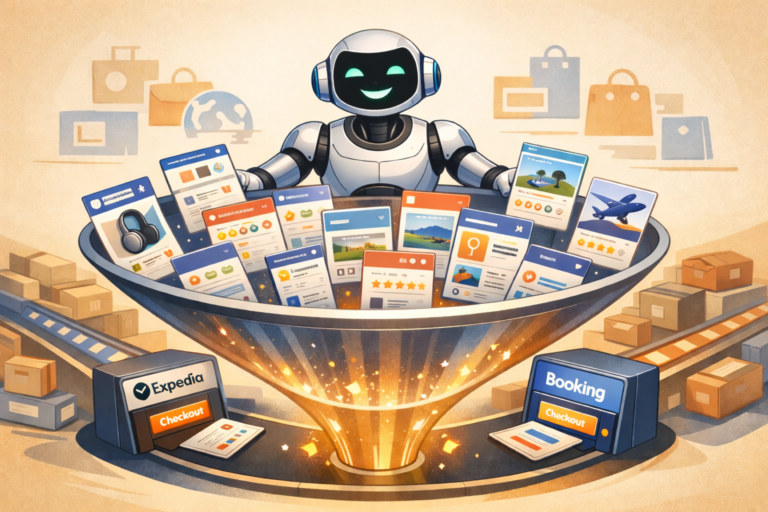
So here it comes: Gemini and ChatGPT are stepping directly, and very deeply, into aggregator territory. No more someday/maybe speculation. In the era of agentic distribution, the agent is the aggregator. It handles the research, the filtering, and the heavy lifting we used to outsource to aggregation options like Google search, Amazon, OTAs, Ulta, and Sephora. For travel, the direction of travel is becoming obvious. OTAs: thank you for your service! Of course, OTAs won’t disappear any more than offline travel agents disappeared when OTAs showed up, but the center of gravity is shifting. The future belongs to the superior shopping experience that personal agents will deliver.
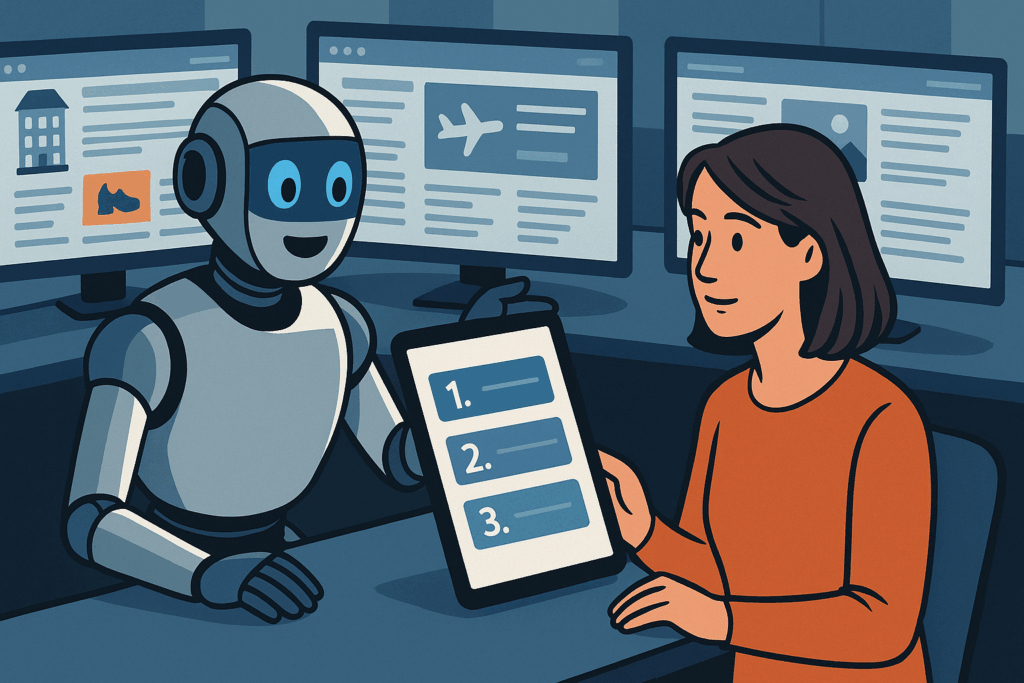
But first, a quick note on one of the most common (and really aggravating) misconceptions I’ve seen floating around. There’s a growing chorus of voices, mostly from people who are invested heavily in the status quo, saying agentic shopping is doomed because “no one will let an AI autonomously buy things for them” as though agentic commerce must include an autonomous purchase step. I think this is a deliberate misread of the whole category. There is no requirement that an agent has to complete the final purchase on its own. Nobody is going to tell an AI, “Go buy me a family trip to Portugal, sight unseen, including final payment.” That’s not the point. The point is everything that happens before that final “Buy” button. I give the AI my requirements and context and it adds what it knows about me, including my preferences from previous trips. It researches like I would…if I had unlimited time. It finds the options that actually match my needs. I review the results. I decide. Then I click “Purchase.” This is exactly what OpenAI and Google are rolling out, and it’s exactly what consumers will expect. Much of this is already available in the travel world and the rest will come pretty quickly.
From supply to demand aggregation: a quick history
Now let’s back up a bit and look at how we got here. Aggregators originally emerged in categories where physical networks created natural monopolies. Railroads, telcos, and energy grids required massive fixed investment, so whoever owned the rails, switches, or wires controlled supply. Back in the day, if you wanted to get rich, you aggregated supply and built a monopoly around it.
Once the internet took hold, everything flipped. Discovery, search, and distribution became cheap. Demand aggregation became the big prize. Companies like Google, Amazon, and the OTAs pulled huge numbers of suppliers behind a single interface and curated all of this supply for consumers. The value prop was simple. Instead of wandering around the web, you visited the aggregator, typed what you wanted, and got a curated list of choices. For a while, this was magic.
When curation turned to monetization
But once aggregators became big successful businesses, the next step was predictable. They went public to pay back their original investors. Wall street then demanded faster growth and better margins. There are only two real levers to do that: (1) invest heavily to get bigger, and (2) extract more value from suppliers. Internet aggregators chose both. Over time, the economics shifted such that suppliers couldn’t afford to be absent from the aggregators, so they accepted higher fees and higher margin pressure. Then paid placements showed up. Ranking was no longer about consumer relevance, it was about the aggregator’s profitability. In travel this became obvious. The hotel at the top of the list wasn’t necessarily the best option for the traveler. It was the one that optimized transactional profitability: the OTA’s profit for each option multiplied by the likelihood that the traveler would click on that option.
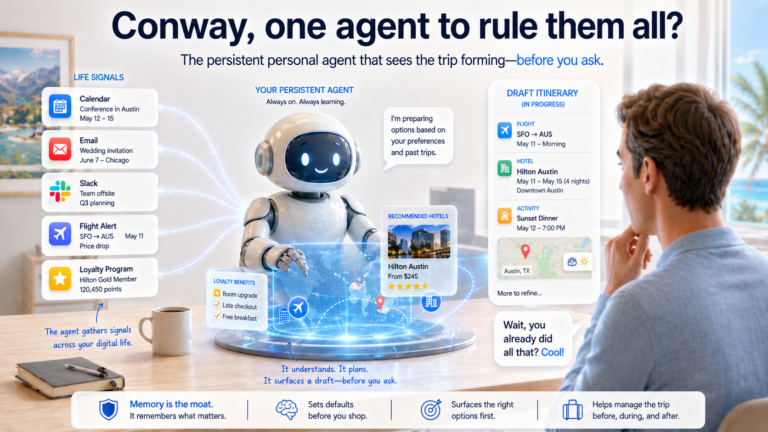
Enter agentic shopping. This is the third shift in aggregation. Agents will now be doing the aggregating, and they’ll do it on your behalf. They pull from dozens or hundreds of sites, run the comparisons, evaluate the tradeoffs, and present options that align with what matters to you. And they don’t need to do this through a static interface. They can spin up specialized agents for whatever task you give them. They can remember what kind of trips you like to take for business or family or couples travel. They can monitor price drops on bucket list destinations. They can surface opportunities based on your interests, like an upcoming concert tour, or a tour company expanding into a region you’ve always wanted to see.
The key shift is this: OTAs and other aggregators optimize for their own economics, personal agents optimize for the traveler, and that difference is enormous in practice. One model is is all about ads, paid placements, and margin extraction. The other is about context, preferences, constraints, and traveler intent. Those two worldviews do not coexist well. When personal agents become the primary interface, the ranking game and the funnel game lose their power.
Now vs. later
And we should not judge agents by where they are today. We should instead think about where they will be in two or three years. The capabilities that Google and OpenAI rolled out this month are the opening act and the direction is clear—agents will handle more of the shopping journey over time. They will understand more context. They will react to more signals in your world. One very interesting aspect of agents is that they aren’t limited to a passive role in your travel program, they will surface more relevant ideas without being asked. If you’ve ever used ChatGPT’s Pulse product, you know how it searches on your behalf overnight and presents you with summarized items of interest. Imagine how that might work in the travel world where you can give it some general instructions about roughly when you want to travel along with some loose guidelines it can interpret for you. Pulse could give you some highly targeted options periodically when prices are down or something serendipitous pops up that could rock your travel world.
For travel executives, the question is not whether this will happen, it’s just how fast it will happen. Obviously, I think it’s already begun and well along, though I agree we have more to go before we see agents shopping against suppliers directly for the best options. Most suppliers still haven’t created those agent-friendly places for traveler’s agents to knock on their door. Still, general retail is the early indicator, and it is already moving strongly. It’s definitely going to help me with holiday shopping this season. Once consumers become accustomed to this kind of experience for everyday purchases, they will expect it for travel. They will expect their AI to remember their preferences. They will expect it to do the research. They will expect it to assemble options that make sense for them. And they will expect suppliers to be ready to be consumed by agentic channels. I just don’t see any backing away from it–it’s a better consumer experience by far for most of us.
The companies that prepare for this shift will gain share. The companies that cling to today’s funnels and ranking games will become stay visible, on the web, but languish in agentic channels. That’s not because travelers stop caring about them, but because their agents will never see their best options from them. The aggregation layer is moving again, and this time it is moving to the agent. These recent moves from Google and OpenAI show how they’re ramping up on the consumer end. It would really be great to hear that bigger suppliers and third party tech players are moving as aggressively on theirs.