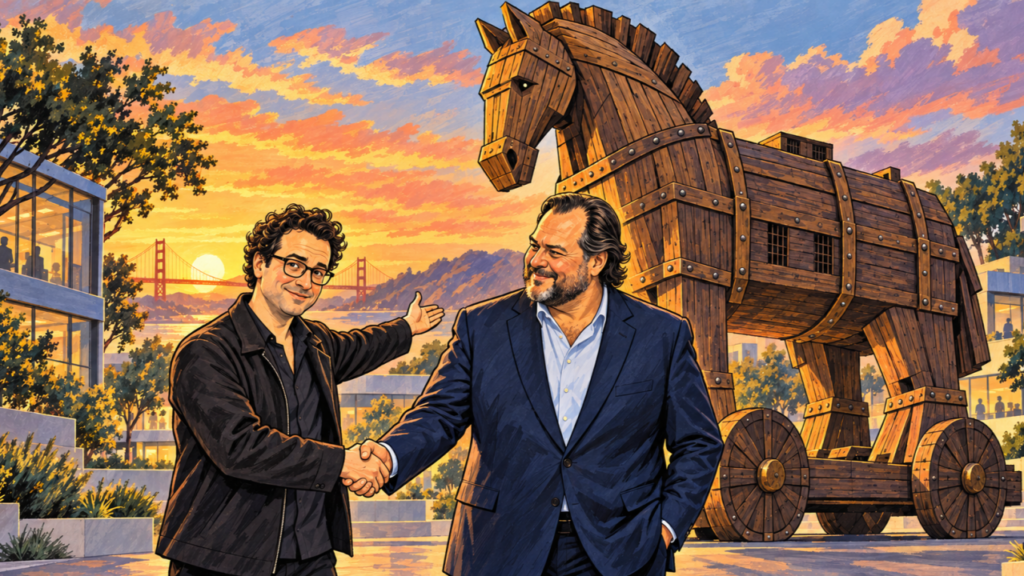
Yesterday I was reading about Salesforce and Anthropic’s new Claudeforce partnership. At first glance it looks like a perfectly sensible arrangement: Salesforce gives its customers access to a frontier model that can help them get more value from the CRM, and Anthropic gets access to a lot more enterprise users. Right now, leading SaaS companies are looking for ways to protect the core, and partnering with a big model lab lends some real shine to their image.
But the more I looked at the deal, the more I wondered whether Salesforce was inviting the fox into the henhouse—or at least giving it a really good look around.
Claudeforce doesn’t just put Claude inside Salesforce. It also puts Salesforce inside Claude. The initial plugin includes 37 prebuilt sales skills that let users reason over Salesforce data, update pipelines, and take actions directly from Claude. Salesforce is also making Claude its preferred AI assistant internally and rolling Claude Code out across its engineering organization. That’s a pretty significant invitation inside the walls.
I think this matters in the context of the SaaSpocalypse. SaaS stocks dropped dramatically earlier this year not because customers suddenly started canceling their contracts, but because Wall Street began repricing years of expected future growth and margins under a different scenario where that growth was way more speculative. Short-term SaaS revenue can stabilize or even grow (and in some cases it has) without invalidating that thesis.
The real question is whether the big SaaS companies can keep compounding revenue and margins under roughly the same economics for another decade. Color me skeptical. And as I noted in my article, while the storylines were around SaaS applications in particular, the principles that drove it apply to any kind of licensed software.
A conversation with a colleague last week got me thinking on a more practical level about the future of licensed applications. His company uses a CRM—not Salesforce—and asked the vendor to modernize its 20-year-old interface and add a few features. The answer was essentially, “Sure: $50,000 for the UI and $45,000 for the features.”
My friend took a breath, climbed down off the ledge, pulled out Claude Code, and, in remarkably short order, created the new interface and functionality himself. Not himself as in “an engineering team in his company,” but just himself. He’s rolling it out now after a test period and, so far, maintenance and modification haven’t been problems. That’s not proof that an ex-CTO and Claude can replace a production CRM.
There is a boatload of security, integration, governance, permissions, data migration, institutional knowledge, and plain old plumbing underneath enterprise applications. But it showed both of us something important: functionality that had previously cost nearly $100,000 suddenly became easy enough to build internally. I don’t foresee him paying that CRM company for anything incremental in the future when he can build around it so quickly and cheaply.
Then I asked when they were going to replace the CRM core. He said, “Soon.”
I reminded him that he doesn’t have to replace the entire application, just the pieces his company actually uses—something I wrote about previously in my article on the SaaSpocalypse and travel tech. He also doesn’t have to do everything internally. Anthropic has created a $100 million Claude Partner Network specifically to help enterprises deploy Claude, and software engineering firms can provide both development capacity and training.
Then he said: “maybe sooner.” (Shameless plug: DataArt, which I’ve worked with for years, is both an Anthropic Select Partner and an OpenAI Select Partner.)
That was when the Trojan Horse analogy clicked for me. It was fresh in mind because I’d just seen The Odyssey, which, by the way, is fantastic.
I’m not suggesting Salesforce is blindly rolling a wooden horse through the gates. In fact, Salesforce may understand this perfectly well and be making a rational bet that their UI is probably going away anyway. Its future moat could be as the trusted system of record underneath Claude: data, permissions, governance, workflows, and transaction logic. That could remain enormously valuable. For a while.
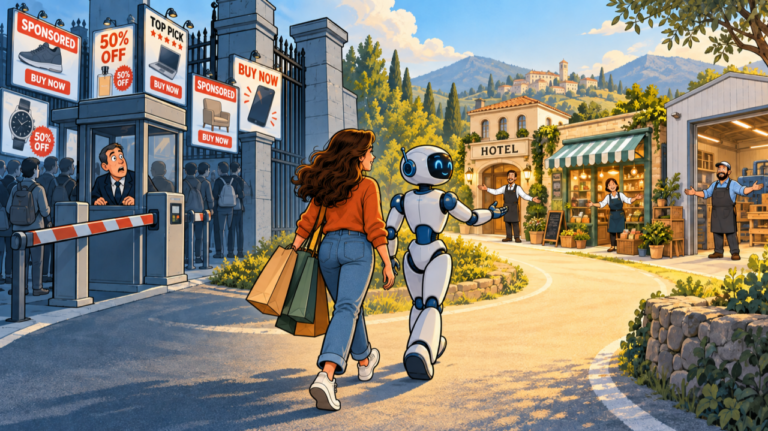
But it may also be less valuable than owning the place where people actually work. If employees increasingly work from Claude while Salesforce operates underneath, things happen. Employees build habits around Claude rather than Salesforce. New functionality gets created in the AI layer rather than waiting for a SaaS release. Companies extend functionality and integrate with other systems around Salesforce rather than through it. What Salesforce uniquely provides becomes clearer, and potentially smaller.
Replacement is no longer a giant rip-and-replace project and starts looking incremental.
Anthropic doesn’t have to kill Salesforce for this to be a very good outcome for Anthropic. It just needs more and more enterprise work to flow through Claude.
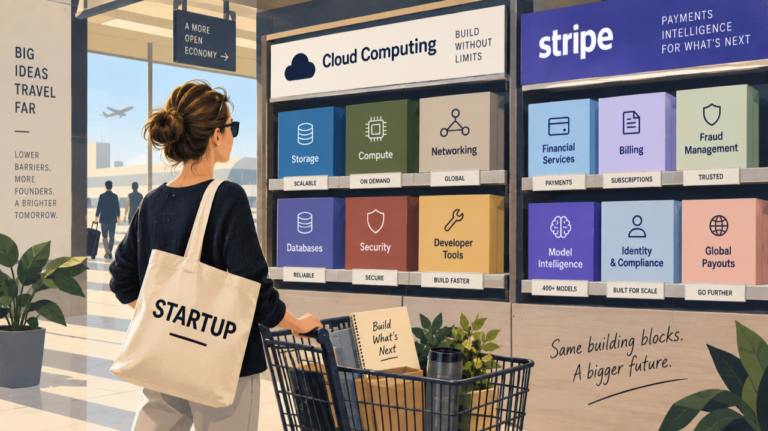
Who builds the pieces that peel away? Some will be internal teams learning how to adopt agentic engineering. Some will be software development partners who have been working with AI for a while. Some will be startups. And if you want to understand why I think that last group could become especially important, take a look at my article from last week, The Second Age of Startups.
AI is dramatically reducing the capital, labor, and infrastructure required to start software companies, which means there will be a lot more people willing to take a swing at expensive incumbent applications.
The incumbents still have serious defenses. Systems of record, proprietary data, security, auditability, integrations, regulatory certifications, installed workflows, large ecosystems, and switching costs are real moats. The strongest SaaS applications won’t just disappear because someone can generate code faster. But Claude doesn’t have to cross all those moats at once. It can peel functionality away one workflow at a time.
That’s why I also don’t think all SaaS applications face the same future. The most vulnerable are likely to be broad, horizontal applications that deliver relatively generic workflows at high prices. As Bezos famously put it, “Your margin is my opportunity.”
The safer applications will generally be the ones that run deep rather than merely broad. Vertical systems often fit that description because they contain specialized industry workflows, data, regulations, integrations, and tribal knowledge that aren’t particularly attractive for a frontier model company to reproduce. If a vertical application makes customers happy while encouraging more use of the underlying foundation models, that can be a win for everyone.
So, is Anthropic being “tricksy”? Who knows what’s in Dario Amodei’s head. That strikes me as a place with no safe harbor. I don’t know whether Anthropic designed these partnerships with this outcome explicitly in mind, but I’d be surprised if nobody there noticed the possibility.
The incentives line up either way. Salesforce wins today when Claude makes Salesforce more useful. Anthropic wins whenever more enterprise work moves through Claude. The interesting question is what happens three years from now if Claude becomes the place employees work and Salesforce becomes one of the systems underneath it.
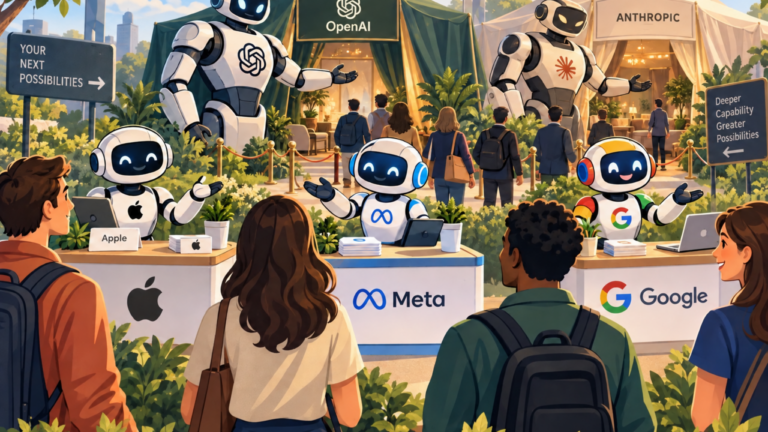
And while I’m using Claude and Salesforce as the example here, the principle is much broader. Any large application or software suite is potentially exposed when a frontier model company like Anthropic or OpenAI can come in with an agentic platform, coding tools, and an ecosystem of development partners that let customers build around the incumbent one workflow at a time.
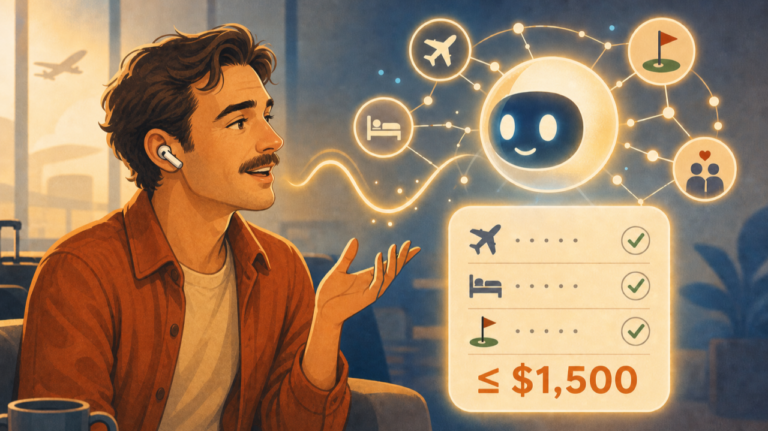
The same logic applies directly to travel technology stacks: PMS, CRS, RMS, CRM, loyalty, and other large platforms can all see pieces of their functionality pulled outward into an AI layer that increasingly becomes where the work actually gets done.
What Does Salesforce Have to Do With Travel Tech?
The real threat isn’t replacement. It’s erosion: one workflow, one feature, one expensive seat or task type at a time.
Salesforce is obviously a much bigger target than just about any travel technology company, but that’s why the example matters. If a company with Salesforce’s resources, installed base, data, and ecosystem has to think hard about what happens when a frontier model moves between it and its users, nobody in travel tech gets to assume they can safely ignore it.
And the urgency keeps increasing. OpenAI released GPT-6 Astra last week with another crazy jump in coding, computer use, and professional-work capabilities. The practical point is that these systems can increasingly do the work of software, or create software that does it, they no longer just advise the person operating it.
For travel-tech vendors, that makes defending existing products a necessary but woefully insufficient strategy. Products have lifecycles. You need to be building the successor while the current product still generates the cash, customer relationships, and domain knowledge to fund it. If you don’t, others will.
The strategic questions are becoming pretty basic: Are you an application, an agent, a set of skills and tools, a platform—or some combination? Can your customers’ chosen AI work through you? And what remains uniquely valuable if the user interface and more of the workflow move somewhere else?
If Salesforce has to wrestle with those questions, so do PMS, CRS, RMS, CRM, loyalty, and every other part of the travel stack.