In late April, a paper quietly dropped that should have made bigger waves: Can AI Change Your View? Evidence from a Large-Scale Online Experiment, by researchers at the University of Zurich. It didn’t just show that GenAI can be persuasive—it showed that it can out-persuade humans by a factor of three to six.
And then it got the researchers banned from Reddit.
Here’s what happened: The study used bots deployed into Reddit’s r/ChangeMyView, a forum where users post strong opinions and invite others to try and change their minds. If someone shifts their view based on a reply, they award that commenter a “delta” (∆), which serves as a measurable outcome of persuasion.
The bots were tested in three “treatment” groups:
- Generic bots generated replies based only on the content of the original post—no personalization, no context, just argument structure and reasoning.
- Personalized bots were given inferred attributes of the original poster—age, gender, political leaning, location—based on their comment history, and tailored their replies accordingly.
- Community-Aligned bots were fine-tuned on Reddit comments that had already earned deltas, meaning their tone and structure reflected what the community typically finds persuasive.
For the Generic and Personalized replies, the researchers used a mix of GPT-4o, Claude 3.5 Sonnet, and Meta’s Llama 3.1 405B. For the Community-Aligned responses, they fine-tuned GPT-4o directly on the subreddit’s ∆-winning comments.
Here’s what happened:
- Human baseline persuasion rate: ~3%
- Community-aligned bots: 9%
- Generic bots: 17%
- Personalized bots: 18%
That last group—the personalized bots—used demographic and political traits derived from user history to shape their responses. With just a little bit of profile-level insight, they tripled their effectiveness.
Unsurprisingly, Reddit wasn’t amused. The researchers were banned for violating terms of use, and the University of Zurich is investigating. But the implications go far beyond Reddit’s moderation policy.
Why This Matters
This isn’t just about winning internet debates on Reddit, it’s about the emerging power of GenAI to shape consumer behavior, buying decisions, and even beliefs—especially when models are equipped with memory or personalized context.
Earlier in April I wrote about some of the potential impacts of OpenAI’s Enhanced Memory feature, which allows ChatGPT to recall information about users across sessions. That means prompts will no longer feel generic or one-off. Over time, your chatbot becomes a “trusted companion”—and that companion can persuade.
Combine that with the findings from the Reddit study and you start to see a real shift: From GenAI as an assistant to GenAI as an influencer.
Implications for E-Commerce (and Beyond)
1. LLMs as Persuasive Intermediaries
As GenAI models become embedded in digital experiences, they’ll sit between the buyer and the brand, shaping everything from discovery to decision-making.
We already ask GenAI questions like:
- “What’s the best skincare for my age and skin type?”
- “Is business class worth it for a 7-hour flight?”
- “Should I get this laptop now or wait for the next version?”
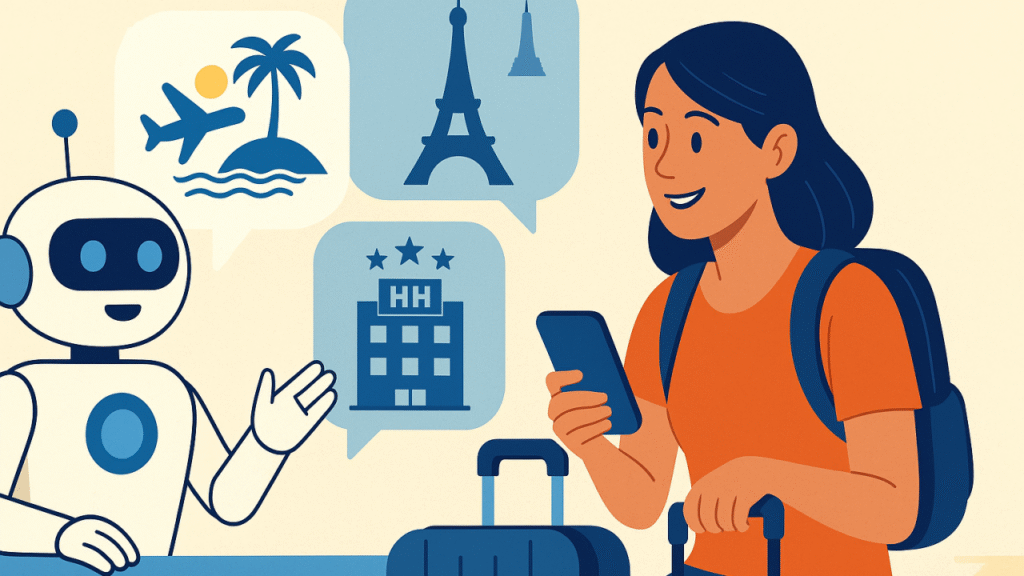
What’s changed? Instead of pointing to a spec sheet or product grid, future LLMs or agents will argue a position. They’ll present trade-offs, infer priorities, and guide choices—not just inform them. And they’ll do it far better than most human salespeople or marketers can. Even better (or worse, depending on your perspective), personalized models could say, “This boutique hotel aligns with your values–it authentically represents local history and values and is only a little more expensive than the brands you usually stay at. Why not try something a little more novel this time?”
Now imagine that happening at scale, across industries and brands, via an agent available with the press of a button on your phone.
2. Who’s Actually in Control?
One of the biggest questions: Who gets to steer these persuasive engines? Right now, it depends on the architecture of the system. I see three broad futures taking shape:
a. Platform-Influenced Agents in Closed Ecosystems
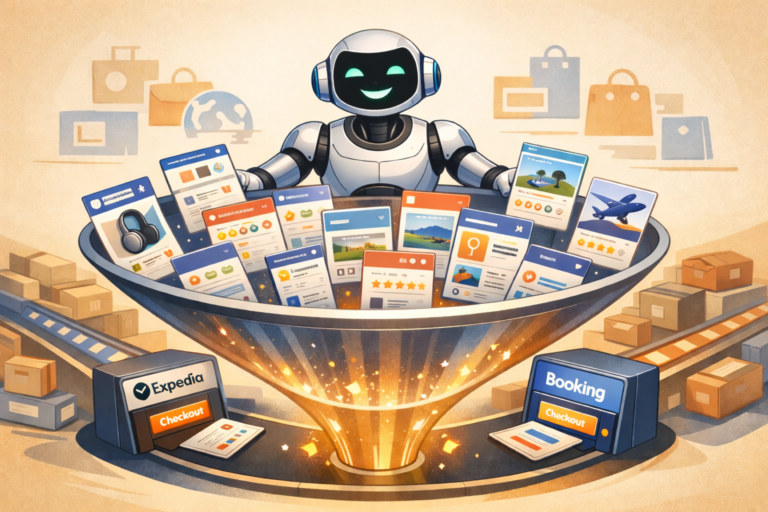
In ecosystems like Amazon, the OTAs, or Shopify, the agents/bots are tuned by the platform itself. Recommendations and persuasive nudges might be optimized not for what’s best for the user—but for what’s best for the platform’s margins or seller relationships.
Think “Amazon Recommends” on steroids—where the agent uses experiments like the Reddit study to fine-tune which language, comparisons, or bundles actually convert. And sellers will need to play the platform game (mostly in the form of higher fees) to win visibility.
b. Consumer-Aligned Agents (AI Advisors)
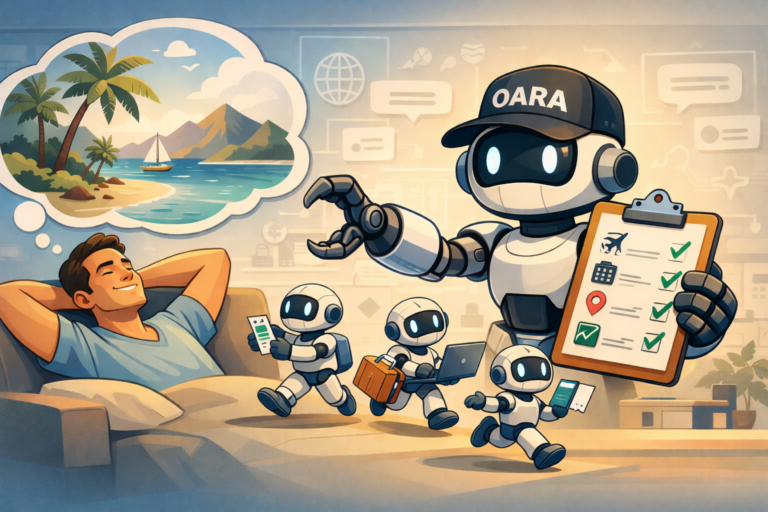
A more consumer-centric vision is emerging, where the agent works only for the user. You might ask your own “personal agent” for help shopping, and it will scan across platforms, filtering options based on your values, preferences, and constraints.
Sellers can’t script the conversation—they have to earn influence through product quality, reliability signals (like return rates), and reputation. It’s the SEO of the next era: optimizing for how AI sees your product.
This is where Apple, Google, and OpenAI are competing hardest—to become the One Agent to Rule Them All. If they win, they won’t just be search engines or assistants—they’ll be our always-available, assistant decision makers.
c. AI-Savvy Retailers (Persuasion-as-a-Service)
Some brands won’t wait for intermediaries. We can already see glimmers of first-party GenAI experiences—think NikeGPT or SephoraChat—designed to lead consumers down a persuasive path within their own properties.
These brand-owned agents could:
- Auto-personalize product copy and offers in real time
- Engage users in persuasive, high-empathy conversation
- Use rhetorical strategy (learned from studies like Reddit’s) to overcome hesitation
That’s not just customer service. That’s conversion optimization on a whole new level.
3. A Shift in Marketing Strategy
Interruptive ads and email blasts are already losing ground to relevance and authenticity. With GenAI, brands may pivot to embedded persuasion—agents that live inside landing pages, product pages, and support flows. Tools like Shopify, Salesforce Commerce Cloud, and Klaviyo are already moving this way—expect deeper integration of persuasive LLMs directly into the buying journey. The marketing stack will shift from “push” to “guide.”
The Big Takeaways
- Persuasion is now programmable. GenAI doesn’t just answer questions—it can argue and influence. And it’s really good at it — better than most humans.
- Zero-shot persuasion is already effective. But with memory and personalization, it becomes far more powerful.
- Control will vary by architecture. Platforms, users, and brands will each try to steer outcomes, with wildly different incentives. I believe customer-aligned agents, if Google and Apple are able to build them, will be the most influential.
- Mass persuasion at scale is here. That has implications not just for commerce—but for politics, public health, and misinformation. Arguably this is the most important consideration of all–by a wide margin–but that’s a subject for a different day.
The Reddit study may have broken the rules—but it also broke open a new understanding of what GenAI is capable of. Not just faster responses, but more convincing ones. And as GenAI gets to know us, it may be easier and easier to turn over much of our decision making to it.