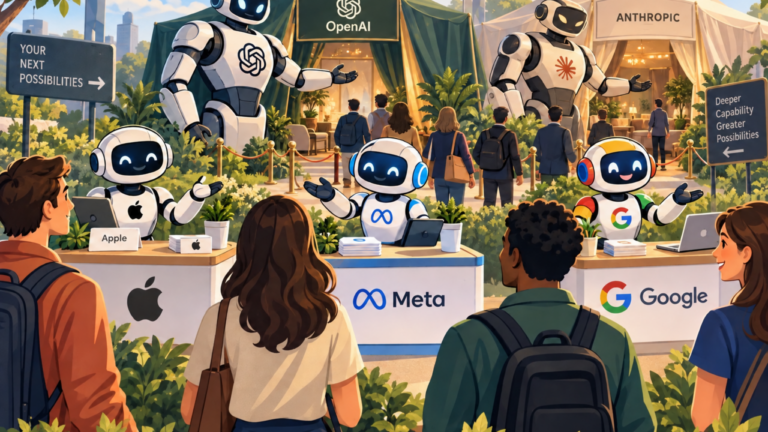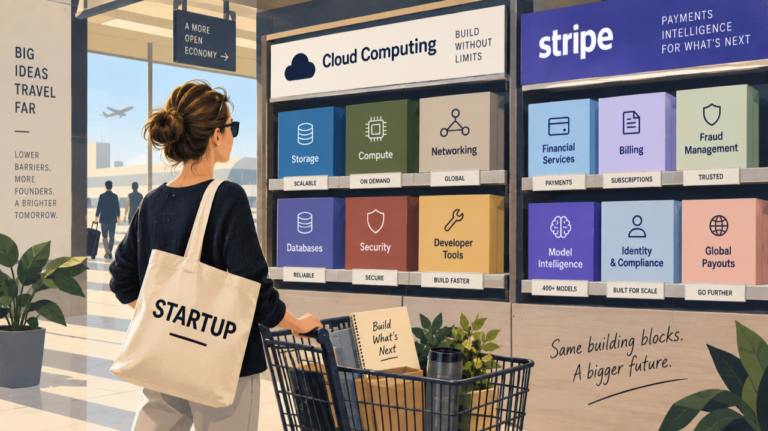
Muse is giving consumers a reason to hand over the shopping, and suppliers a reason to deal directly with their agents. Personal agents like Muse represent the ultimate in convenience and will become the new aggregators, with most agentic commerce eventually bypassing the web intermediaries that currently organize it.
That future isn’t fully here yet. But a lot more consumers (and investors) are beginning to see and feel how it could happen with the appearance of the Muse personal agent.
The “aha” moment finally arrives
For years, personal agents have sounded promising, at least to me! Then Meta releases Muse (with an ad campaign that would make even Google weep with envy); someone hands it an unwanted subscription, a disputed charge, or a shopping assignment, and it actually finishes the job. Suddenly, the idea needs very little explanation.
To my eye, Muse is the first capable personal agent with an interface accessible enough to draw in large numbers of nontechnical users and deliver that “aha” moment. Sensor Tower estimated more than 3.4 million downloads through September 24, a little over two weeks after launch. Downloads don’t tell us how many people will keep using it, but they establish that this has moved beyond a demonstration for enthusiasts.
Meta has packaged agent delegation in a familiar conversation. Muse runs on a dedicated cloud computer, can continue working after the user closes the app, and asks for approval before sensitive actions. Those features reduce the effort of getting started, although they don’t eliminate the risks of giving an agent access to your accounts.
I expect OpenAI and Anthropic to make their personal agents more approachable, too. And their agents are arguably far more competent than Muse. But Muse doesn’t have to win forever to change what consumers expect—it’s winning hearts and minds now, and quickly. And it seems to be getting traction by promoting convenience and reducing friction in our day-to-day lives, particularly by making it absurdly simple to do things we don’t like to do.
There’s money in the chores we avoid
Early use cases are really all over the board, but if you look on social media, you can see the enthusiasm. Meta isn’t releasing use case data, but there have been some customer surveys. FUNDA reviewed 654 public Muse cases and classified 19.6% as saving money, refunds, or personal finance; 10.6% as administrative tasks; 9.5% as shopping; and 8.1% as travel. Its broader “life admin” grouping accounted for roughly 63%.
These are self-reported cases collected from public posts, so take them that way.
A separate TickerTrends sample also found shopping and travel high on the list, with 61 and 51 mentions respectively among its categorized tasks. Different methods produced different rankings, but both show consumers are experimenting with decisions involving money and everyday obligations—especially the ones they hate to do.
There are also reports of people creating documents and small personal applications. For commerce, though, the immediate attraction is easy to understand: an agent can take on work people have been avoiding. Your personal agent’s afternoon isn’t ruined by waiting on hold, no matter how long it stretches on.
All this has caught investors’ attention. Bloomberg reported that Expedia fell 3.7% and Booking 3.9% on September 22 on concerns about personal agents. Goldman Sachs assembled a “consumer inertia” basket identifying businesses exposed to customers becoming more active about comparing, switching, and canceling.
Share prices reflect expectations, and investors can get panicky. Still, the economic question is real: how much revenue survives because customers can’t be bothered to do the work required to stop paying? Do you really need all those subscriptions? Customer inertia has been a huge feature for many companies but you really have to wonder how much it will continue if Muse and other personal agents can hack away at it tirelessly.
The agent becomes the aggregator
As I argued in Personal Agents: The New Aggregators, personal agents can take over the aggregation function that shaped the commercial web and gave rise to aggregation juggernauts from Amazon to Expedia to Ulta and onward.
The web gave consumers an abundance of suppliers and a discovery problem. Google helped people find things. Marketplaces and online travel agencies organized options, comparisons, and transactions. Businesses learned to compete for visibility wherever customers began their search. They simplified discovery when there were too many options to consider individually. And wow, did they ever make a business out of that!
But personal agents can combine discovery with action. Tell an agent what you need, and it can investigate suppliers, compare offers, recommend a choice, and take the next steps. With permission, it can also carry your preferences and constraints from one purchase to another.
Consider a hotel search. You want a quiet room, a refundable rate, and a location within walking distance of your meeting. The agent’s job is to find an offer that meets those conditions. You shouldn’t have to decide which booking website deserves the assignment before the search begins.
Initially, agents may rely heavily on existing intermediaries because those companies already provide organized inventory and transaction systems. My expectation is that this dependence will shrink as suppliers make direct access easier. Over time, I’m betting most personal agent transactions will go supplier-direct.
Suppliers will help make that happen
A hotel has a reason to cooperate if direct agent bookings reduce distribution costs and bring qualified customers. So does a retailer or service provider. Once agents deliver enough demand, suppliers have an incentive to make their offers easier to find, evaluate, and buy.
We’ve seen that response before on the web. Businesses adapted their websites to search engines because search engines brought customers. The same commercial incentive can encourage suppliers to accommodate personal agents.
Travel makes the work involved particularly clear. An agent needs accurate availability, prices, room attributes, cancellation terms, payment, and help when plans change. Today’s results may be uneven, but Muse shows that people are willing to not only let it do the discovery and prepare recommendations for them, but also carry the transaction through to payment for both retail and travel. I’m sure the numbers aren’t big on the travel side but I’m pretty sure I know which way they’re heading!
Still, my position is: Who cares? A retailer or supplier who has the transaction dropped off at their doorstep, where the consumer can press the final payment button, is way happier than one with a transaction that comes through an aggregator. I just don’t think human behavior will tolerate going all the way through to payment for any kind of complex transaction, including travel, without their involvement.
I haven’t seen people letting Expedia or Booking plan and book a trip for them without their involvement, or any other OTA, or any human travel agent for that matter. We’ve not done that in the past, so I don’t understand why people continue to use it as a litmus test for the applicability of personal agents to travel.
Don’t overinvest in another destination
More personal agents are coming, and they’re all racing to be the dominant force of agentic commerce. This is why I’d be careful about suppliers spending heavily on branded applications inside specific personal agents.
If the consumer has to open the agent, find your application, and then shop only your offering, you’ve recreated a familiar situation. It’s supplier.com inside a different window. You’re still hoping the customer chooses you before comparing the alternatives.
Muse’s early usage points toward consumers assigning a task and letting the agent shop across suppliers. The difference is how the connection works. A connector that an agent can discover and use while comparing suppliers can be part of the lasting solution. An isolated shopping experience that depends on consumers selecting it manually has a less convincing, and I believe short-lived, future. And then you have to build one for each agent you think might be sending customers your way.
I’d put the larger investment into a supply-side agent that any authorized personal agents can interact with: answering questions, presenting offers, completing purchases, and handling changes. Build it so multiple agents can use it, without requiring the customer to learn another shopping routine, because if you haven’t realized it already, they don’t have to anymore, and they won’t. Personal agents are all about convenience, and building an app in an agent introduces friction.
The incumbents still have a case
Amazon has already blocked Muse from shopping on its site. Advertising, more specifically the revenue it generates, is likely why. Marketplace Pulse reported that Amazon’s retail operations would lose money without advertising. That conclusion depends on estimated advertising margins; Amazon doesn’t disclose enough detail to isolate the profit from merchandise sales.
But an agent directing product selection could weaken Amazon’s ability to charge sellers for influencing that choice.
Still, Amazon also has warehouses, inventory, delivery, and returns that agents cannot ignore, and if you’re hooked on 2-day delivery and easy returns, your agent isn’t going to recommend another supplier that ships on a longer schedule with a sketchy return policy. Walmart is taking a different tack, forging a closer relationship with agents like Muse and betting that if you think 2-day delivery is good, you’re going to love 2-hour delivery even more.
Other things could slow the supplier-direct shift. For Muse especially, there is that nagging trust issue with parent company Meta. That’s why Meta took great pains to address privacy controls with Muse. Meta says Muse conversations and data stored in its virtual computer aren’t shared with its advertising systems. Even with trust issues, adoption seems to be rising quickly.
Become the place agents choose
For suppliers, the work starts with making offers understandable and transactions dependable. For intermediaries, it starts with identifying what customers would still pay for if discovery, comparison, and even the purchase, happened elsewhere.
Muse isn’t the first personal agent, nor is it the most competent, but right now what it’s showing is that being the most frictionless, convenient, and easy-to-access agent will carry the day for a lot of consumers. We finally hit the point many suppliers were waiting for: actual proof of personal agent adoption by ordinary consumers. Siri was supposed to give us that, but it’s more of a skilled chatbot than a true independent agent.
If your business depends on being the place customers start, it’s time to consider what you need to do to make it the place where agents want to end up.