On July 8th, OpenAI released GPT-Live, a much-improved version of the voice model behind ChatGPT. That’s the one where you can talk to ChatGPT instead of typing into the prompt bar. The new version really feels like you’re talking to someone, instead of talking to a chatbot that’s trying to convince you that it’s someone. It’s surprisingly smooth, less like taking turns with a chatbot and more like having a conversation with somebody who occasionally knows far too much.
I played around with it and ended up having several very long conversations. Somewhere along the way, a collection of disparate OpenAI announcements began to look like parts of the same product. They’re starting to paint a much more cohesive picture of where the company is going.
I also thought about a recent Sam Altman interview where he said we were entering the singularity, which was naturally the quote that got all the attention. What stuck with me more was his discussion about pruning OpenAI’s ambitions so the company could concentrate its resources on “what matters most”. Closing down ChatGPT Atlas and Sora couldn’t have been easy, but OpenAI is folding those products plus ChatGPT and Codex into one application instead of maintaining each as a separate product.
That makes the direction clearer, but not transparent.
So, what exactly is OpenAI concentrating on? What matters most?
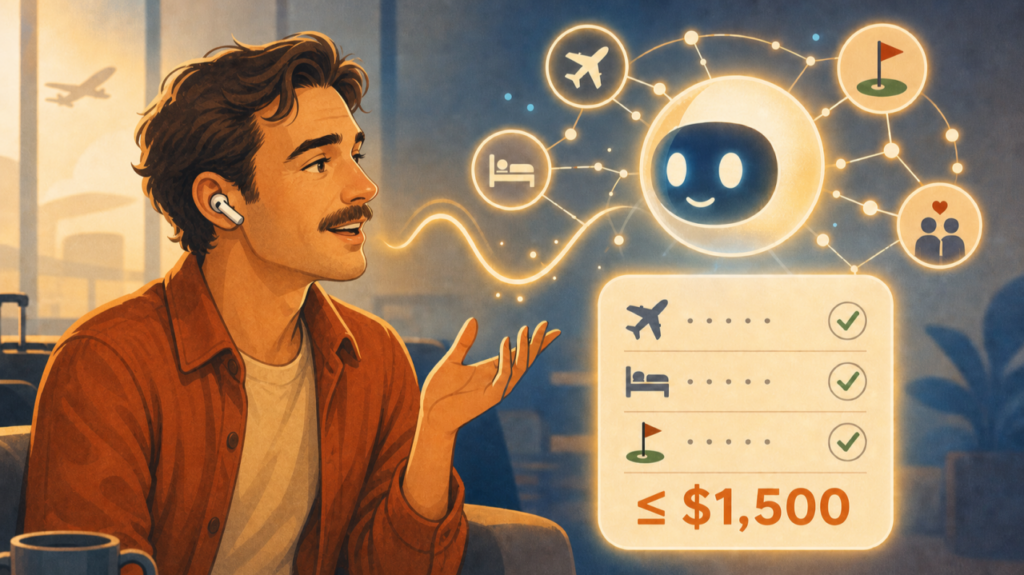
I’ve written before that OpenAI and Anthropic both appear to be creating personal agents that could become the One Agent to Rule Them All. Anthropic seems more interested in conquering the corporate world, while OpenAI is pulling together the pieces for the consumer version. Remember the movie Her, where the main character speaks through an earbud to an always-present agent that knows him and helps run his life? OpenAI is building “Her”.
Hopefully (spoiler alert) she won’t run away in the end like in the movie.
The pieces are coming together
“She” will have multiple components that operate seamlessly (at some point). ChatGPT provides the interface and the relationship with the user. The Codex agent gives the system the ability to work through complicated tasks and take actions, while the browser capabilities moving out of Atlas let it operate across the web. Users shouldn’t have to decide whether they need a chatbot, coding agent, or browser agent. They should just tell ChatGPT what they want done and let it choose the machinery.
Memory lets the agent get to know you over time. It can remember your preferences, family, work, previous decisions, favorite airlines, hotel brands, and other details from earlier conversations. That makes it more useful, but also extremely sticky. Once you’ve spent a couple of years training one assistant to understand your life, starting over with another will have about as much appeal as changing lawyers and therapists on the same afternoon. (And even then it will only be a partial conversion. There’s just no way to pull together and transfer all the details from all your previous conversations, despite what you may read from the model builders who are anxious to have you come over to their side.)
Connections to email, calendars, documents, and other applications give the agent access, with permission, to the information needed to understand what’s happening around you. It can see that you have a trip next week, find the confirmation emails, notice that a meeting has changed, and help figure out what to do to recover.
GPT-Live makes the relationship conversational. The voice is fluid enough that the technology starts to disappear into the background, which is exactly what needs to happen for a personal agent to become part of everyday life. You’re no longer operating software through formal commands.
OpenAI has also merged Jony Ive’s io team into the company to develop AI devices that could make the agent ambient—always nearby without requiring you to pull out a phone or sit in front of a laptop. Nobody outside OpenAI knows exactly what they’ll be, but earbuds, glasses, speakers, or something nobody has thought of yet all seem like good bets.
Then there’s Sky, the Mac interface OpenAI acquired from Software Applications Incorporated. Sky can understand what’s on a user’s screen and take action through the applications already running there. In plain English, it gives the agent eyes and hands inside the computer.
World could eventually contribute another piece: a way to establish that an agent represents a real, unique human rather than another bot. OpenAI hasn’t announced that connection, so this part is speculation. Still, identity and authority will have to be solved before personal agents can safely buy things, sign agreements, and interact with other agents on our behalf.
Put the pieces together, and you have intelligence, memory, voice, computer use, application access, identity, agency, and ambient hardware. None alone creates Her, but together they come pretty close. The interface is still too disjointed for most consumers today, but that increasingly looks like a product-integration problem rather than a missing-technology problem. They’ve exchanged ChatGPT’s solo career for an entire band. It’s coming, and it’s mostly here.
What does this have to do with travel?
Quite a lot. I’ve been writing about the rise of personal agents for quite a while now, but I’ve been stuck inside the box of thinking about how they might operate on a laptop or a phone. That’s on me for not thinking broadly enough.
If you can recognize how useful and convenient it would be to have an agent always running on your laptop, working on your behalf day after day, just imagine how that convenience takes a huge leap when all you have to do is talk into an earbud or some other personal device that is always available. Because once a personal agent is always available, people will use it more frequently, and my guess is much more frequently.
Every interaction gives it more context, which improves the next one and gradually makes it the natural place to begin just about anything, including travel discovery, planning, and purchase. Asking an agent that already knows you will be way more convenient than starting from scratch with Google, an OTA, or a supplier website.
Today’s chatbots can already suggest destinations and assemble itineraries. A genuine agent can go further by researching over longer periods, watching prices, comparing tradeoffs, coordinating different parts of a trip, and continuing when one approach fails. It can evaluate options using what you actually care about rather than forcing you to translate your preferences into a dozen checkboxes that never quite include the thing you wanted.
The personal agent was going to be the new entry point for travel demand. Bringing all the pieces together in one app and making it addressable via these new devices will make it way more attractive. And just to be clear, we’re still talking about travel queries going through a consumer-side agent. We’re just adding those ambient computing touchpoints with the consumers that make it so much simpler and more convenient to access that agent.
Now you don’t even have to take out your phone to start a conversation with it.
The task for suppliers from a few months ago is still the same one. It’s just going to escalate to firehose status that much sooner. The traveler may still book through a hotel, airline, OTA, or another intermediary, but the agent, with its always-available devices, will increasingly decide which places deserve to be shopped in the first place. For hotels, airlines, and other suppliers, the implication is straightforward: we need to be ready when that agent comes knocking.
It will look for accurate information, structured access to inventory and offers, and eventually another agent capable of responding intelligently on the supplier’s behalf, preferably with personalized offers. Companies that can’t provide those things will still be sold, but probably through whichever intermediary can provide them. That’s a familiar movie for travel, and it didn’t end especially well for supplier margins the first time.
The trust problem
The opportunity is enormous, but OpenAI (and Anthropic) only get it if consumers believe the agent is working for them. An agent with access to your email, calendar, documents, spending, travel history, health information, and daily conversations will know more about you than almost any company ever has. That can feel incredibly helpful or incredibly creepy, sometimes within the same five minutes.
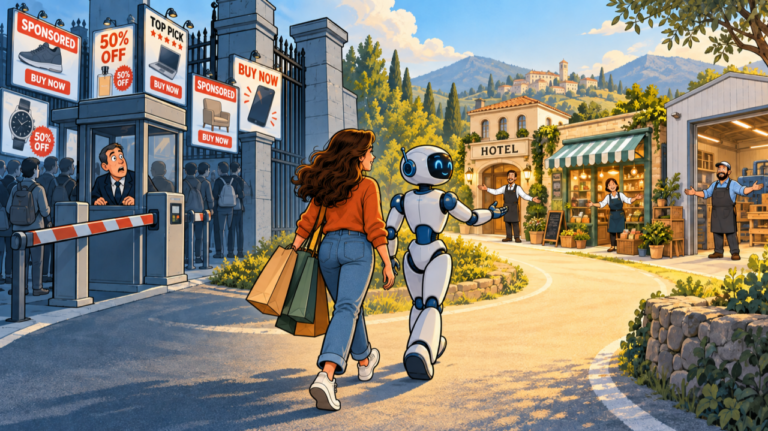
OpenAI will have to convince users that the agent is motivated by serving them rather than selling access to their attention. Consumers won’t want to wonder whether the hotel at the top of the list is really the best fit or simply the one that offered the agent’s owner the best compensation.
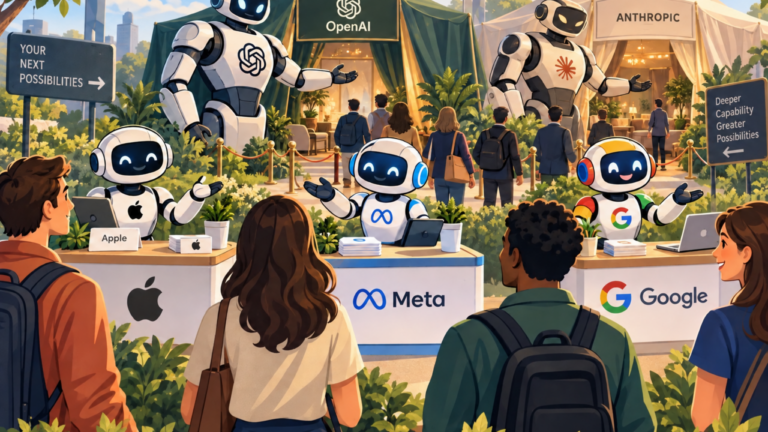
Google and Meta face a structural disadvantage because both have spent decades monetizing targeted attention. Apple has the opposite problem: enormous consumer trust, but so far no agent with comparable capabilities. Its cautious approach could leave Siri feeling like training wheels next to more capable personal agents.
The real prize
The largest prize OpenAI is pursuing isn’t the model, chatbot, browser, or device. It’s the ubiquitous, persistent relationship that understands what the user wants, manages your identity and authority, chooses which systems should act, directs demand, evaluates the results, and determines what should happen next—in a trustworthy manner. Personal agents will be the gateways to our digital lives.
Google and Meta monetize access to attention, Amazon monetizes access to demand, and Microsoft monetizes access to work. OpenAI is attempting to monetize human intention through an always-on personal agent. They’ll make money—an extraordinary amount—just not through selling ad placements. (Note: those em-dashes are all mine. No AI wrote them.)
Consumers place an enormous value on convenience, and it’s difficult to imagine anything more convenient than delegating something to an agent you trust and knowing it will keep working until the job is done.
That’s Her, and much of her is already here.